
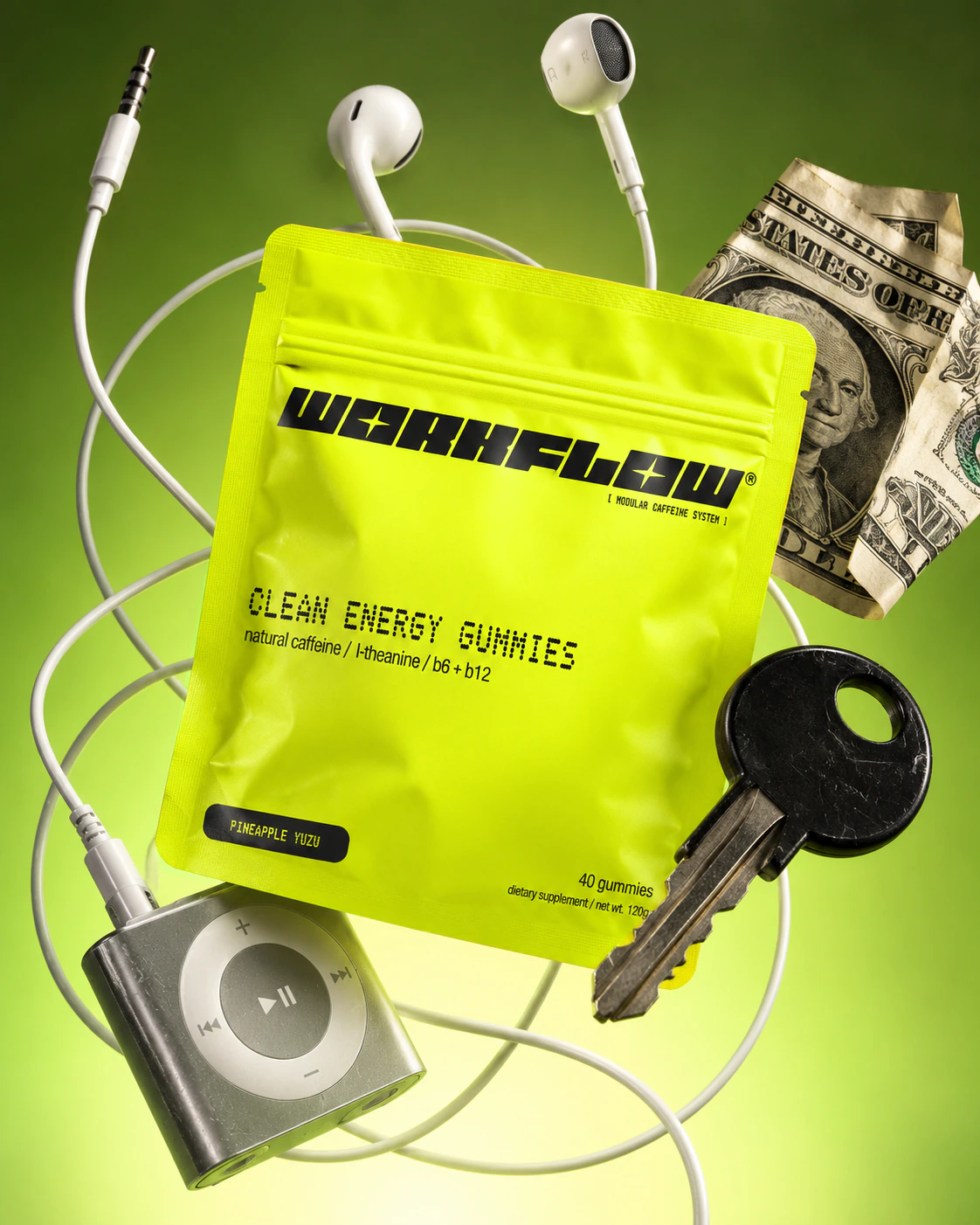
start with the amount in one gummy
compare caffeine gummies by the amount in one piece, then check the serving size. a front-of-pack number may describe several gummies or a whole packet. divide the caffeine per serving by the number of gummies in that serving to compare like for like.
workflow’s label serving is one gummy: 20 mg caffeine + 40 mg l-theanine. a pouch contains 40 gummies, so the pouch count and the amount per gummy answer different questions. the table shows how the ingredient totals change with the number of pieces.
| gummies | caffeine | l-theanine |
|---|---|---|
| 1 | 20 mg | 40 mg |
| 2 | 40 mg | 80 mg |
| 3 | 60 mg | 120 mg |
give the rest of the formula a reason to be there
caffeine + l-theanine is a pairing studied for attention. that makes it a useful combination to understand when you’re choosing a product for work or study. the important details are the actual amounts and the tasks the researchers measured.
workflow pairs the two ingredients in every gummy, alongside vitamins b6 and b12. our ingredient guide explains the human research and how its doses differ from the finished gummy.
pick your fruit. keep the same pairing.
flavor and format belong in the decision. a product can look right on paper and still be the thing you leave at the back of the drawer.
pineapple yuzu or blood orange mango. both bring 20 mg caffeine + 40 mg l-theanine in every gummy, with 40 pieces in a resealable pouch. choose the fruit combination you want to keep in your bag or beside your notebook.
both flavors use fruit juice concentrates and a vegan pectin base, with 2 g sugar per gummy. the core formula stays the same across flavors.
| your flavor | the pairing per gummy |
|---|---|
| pineapple yuzu | 20 mg caffeine + 40 mg l-theanine |
| blood orange mango | 20 mg caffeine + 40 mg l-theanine |
where a gummy fits best
workflow makes sense when you want a chewable caffeine + l-theanine option, small countable portions and fruit flavor in a pouch. it can live with your work essentials without adding another drink to the desk.
if you want the taste and warmth of coffee, keep the coffee ritual. if zero sugar is essential, compare a suitable capsule or sugar-free mint. if you want no caffeine, choose a caffeine-free option. the format should fit what you came for.
put the portion in the context of your day
a gummy still counts toward your caffeine intake. include coffee, tea and other caffeinated products, and follow the directions on your pouch. the table above shows amounts; it is not a schedule for taking more.
looking for less caffeine overall? replace a higher-caffeine serving instead of adding a gummy to the same routine. timing matters too, especially when the next stop after work is bed.
[ TAKE IT WITH YOU ]
choose the amount, the pairing and the experience
[ GOOD QUESTIONS ]
a little more clarity
what counts as a low-dose caffeine gummy?
there is no single category cutoff used in this guide. compare the actual milligrams per gummy. workflow contains 20 mg caffeine per piece, so its amount is clear without dividing a multi-piece serving.
does a gummy work better than coffee?
workflow offers a labeled caffeine + l-theanine portion without a drink. choose it for smaller increments, fruit flavor and convenience; choose coffee when you want the cup and ritual.
are workflow gummies sugar-free?
each gummy contains 2 g sugar. the formula uses pectin and fruit juice concentrates; both flavors are vegan.
do all caffeine gummies contain l-theanine?
no. check the full ingredient panel. workflow contains 40 mg l-theanine alongside 20 mg caffeine in every gummy.
can i get caffeine in a smaller amount without splitting a pill?
yes. workflow contains 20 mg caffeine and 40 mg l-theanine in each whole gummy. the label serving is one gummy. compare the amount in a whole piece and follow the directions on your pouch.
which flavor has more caffeine?
neither. pineapple yuzu and blood orange mango both contain 20 mg caffeine + 40 mg l-theanine per gummy, with 40 gummies per pouch. choose by the fruit combination you prefer.
sources & further reading
original studies, product labels and references used in this guide.
written by workflow. follow the product label. send a question or correction.