
start with what happens after the first bite
you’re opening a draft, settling into a book or heading into the next part of your day. you want some caffeine. you don’t necessarily want another beverage or something to keep chewing through a conversation.
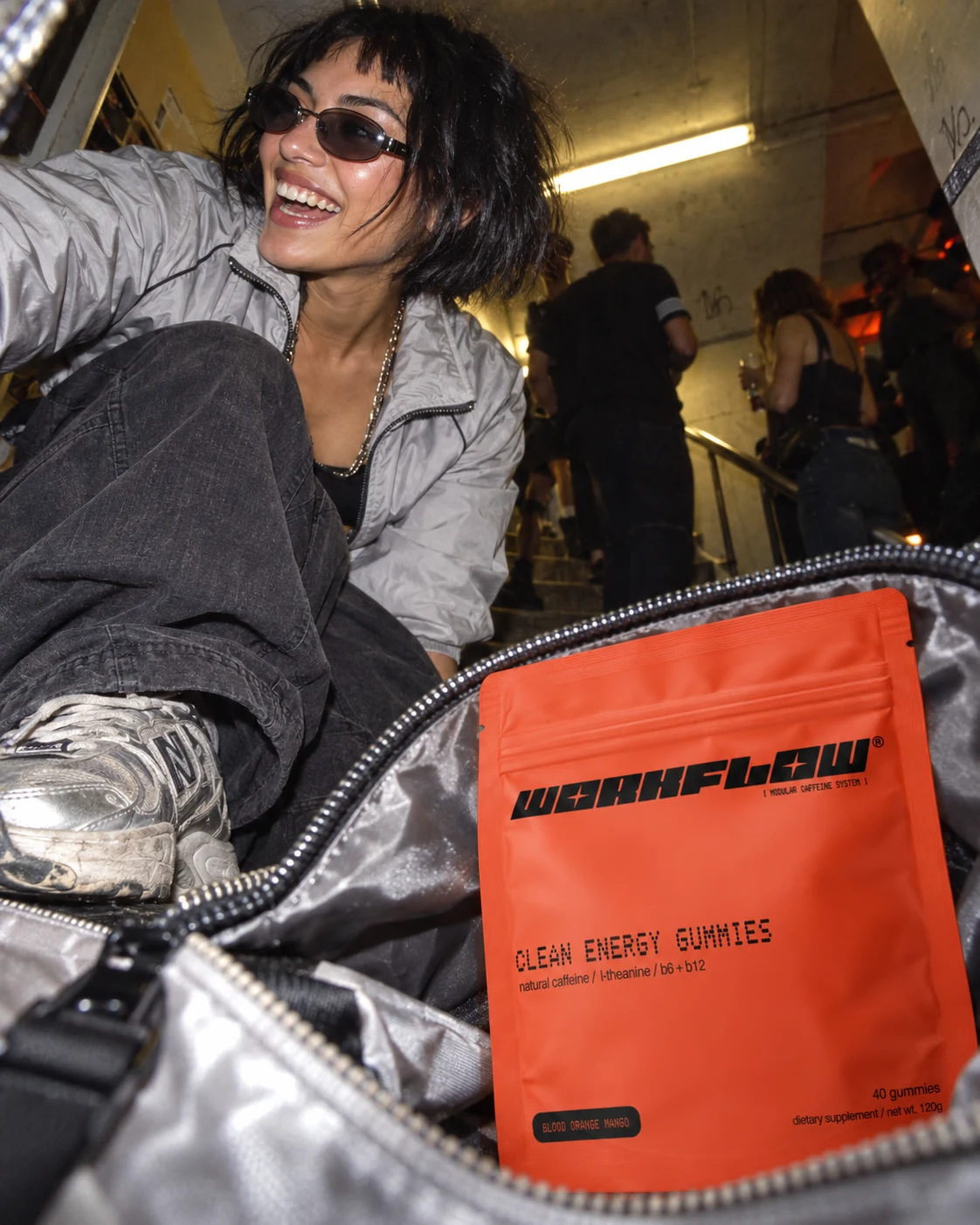
that’s the appeal of a gummy. a short fruit-flavored break, then back to what you were doing. workflow puts the caffeine + l-theanine pairing into that moment, with a smaller amount of caffeine in each piece.
if chewing gum is already part of your routine, a caffeinated gum may fit naturally. if you prefer a mint and don’t want to keep chewing, look at a dissolving format. start with the habit you actually want.
a smaller piece gives you a smaller increment
“one piece” is not a standard caffeine amount. check the exact product and strength before comparing formats.
workflow contains 20 mg caffeine + 40 mg l-theanine per gummy. the standard neuro energy & focus peppermint gum and mints pages list 40 mg caffeine + 60 mg l-theanine per piece. those are specific products, not the amounts in every gum or mint. [1–3]
for workflow, the arithmetic is straightforward:
the table shows amounts, not a schedule. follow your pouch directions and count the caffeine already in your day. [1]
| number of gummies | caffeine | l-theanine |
|---|---|---|
| 1 | 20 mg | 40 mg |
| 2 | 40 mg | 80 mg |
make flavor part of the decision
there’s a reason workflow comes in pineapple yuzu and blood orange mango. sometimes you want fruit, not another coffee or mint.
both flavors use fruit juice concentrates and pectin. each gummy contains 2 g sugar, 2 mg b6 and 1,000 mcg b12. each pouch holds 40 gummies. the caffeine + l-theanine amounts are the same in both flavors. [1]
the standard neuro products above are labeled sugar-free. if zero sugar is the deciding requirement, that is a concrete reason to choose a suitable gum or mint. if fruit flavor, a finished chew and 20 mg caffeine increments are what you came for, that is where workflow earns its place. [1–3]
what the research tells you
ingredient research and delivery-format research answer different questions.
in a randomized crossover study of 27 participants, 50 mg caffeine + 100 mg l-theanine improved attention-switching speed and accuracy versus placebo at 60 minutes. that study examined the ingredients at those amounts, rather than workflow’s finished gummy. our ingredient guide explains the tasks and findings. [4]
a separate randomized, open-label crossover study of 16 healthy adults compared a caffeinated gum with instant coffee, each formulated with about 50 mg caffeine. researchers found no statistically significant difference in time to peak plasma caffeine. it did not test gummies or establish a fastest format across the category. [5]
choose your format around the amount and experience you want, rather than treating a general “fast acting” headline as a stopwatch.
bring a different kind of caffeine to your desk
workflow is for the person who wants the pairing, the fruit flavor and a smaller caffeine increment without another drink.
choose pineapple yuzu or blood orange mango. both deliver 20 mg caffeine + 40 mg l-theanine per gummy, in a resealable 40-gummy pouch.
[ TAKE IT WITH YOU ]
fruit flavor, a finished chew and smaller caffeine increments
[ GOOD QUESTIONS ]
a little more clarity
is a caffeine gummy the same as caffeine gum?
a gummy is chewed and swallowed. chewing gum is kept in the mouth while you chew, then discarded. the amount of caffeine depends on the specific product, not the category name.
do caffeine mints contain l-theanine?
some do. the standard neuro energy & focus mints page lists 60 mg l-theanine alongside 40 mg caffeine per piece. read the exact product label; the word “mint” does not specify a formula. [3]
why choose workflow over a caffeine mint?
choose workflow for fruit flavor, a gummy you finish chewing and 20 mg caffeine + 40 mg l-theanine per piece. a mint is a better fit when you want the mint experience or a suitable sugar-free option.
are all caffeine gums faster than gummies?
the studies cited here do not establish that claim. the gum-versus-coffee trial measured blood caffeine, and it did not include a gummy. compare specific study methods before applying a speed claim to a different product. [5]
sources & further reading
original studies, product labels and references used in this guide.
written by workflow. follow the product label. send a question or correction.