
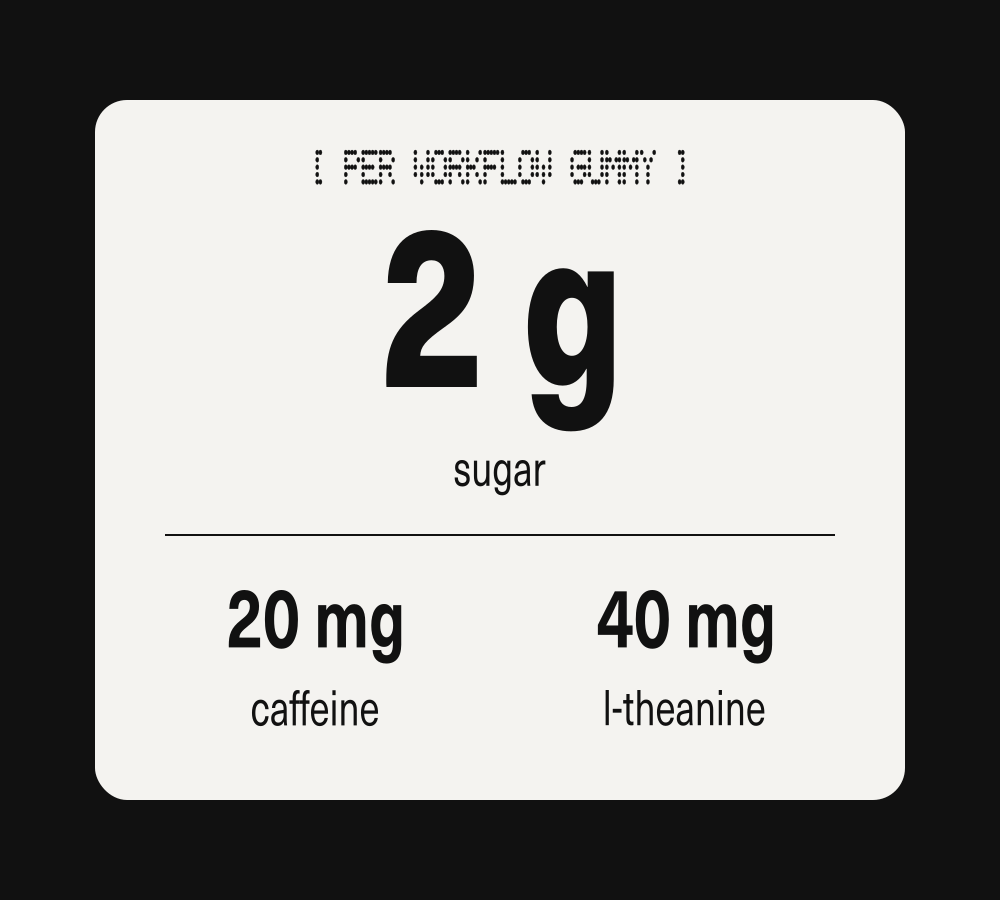
a fruit gummy, with the numbers attached
you want caffeine for the next part of your day, and you want to enjoy the way you take it. workflow puts the caffeine + l-theanine pairing into a fruit-flavored gummy you chew and swallow. no brewing, no mixing and no drink to finish.
both flavors use cane sugar, fruit juice concentrates and pectin. each gummy contains 2 g sugar. one gummy is also the label serving, so you can read the sugar and caffeine amounts on the same basis. the resealable pouch holds 40 gummies. [1]
compare the portion, then compare the sweetener
two products can print different serving sizes on their panels. before comparing their sugar amounts, check how many pieces each serving contains and how much caffeine comes with it.
for a per-piece comparison, divide the listed sugar and caffeine amounts by the number of pieces in that serving. when you choose more pieces, both totals change. here is workflow’s arithmetic:
the table shows ingredient totals. follow your pouch directions and include other caffeine in your day.
| workflow gummies | sugar | caffeine | l-theanine |
|---|---|---|---|
| 1 · one label serving | 2 g | 20 mg | 40 mg |
| 2 · two label servings | 4 g | 40 mg | 80 mg |
what the sugar lines actually mean
total sugars includes both naturally occurring sugars and added sugars. an “includes added sugars” line is part of that total, not an extra amount to add on top. [2]
workflow’s published panel lists 2 g on its “sugars (added sugars)” line for one gummy. that is 2 g, not 4 g. fruit juice concentrates appear in the ingredient list alongside cane sugar; “made with fruit” does not mean “no added sugar.” [1]
if you are comparing a sugar-free product, look at its ingredient list too. sucralose, stevia-derived sweeteners and sugar alcohols such as xylitol or maltitol are different ingredients. the word “sugar-free” alone does not tell you which sweetener a product uses. [3]
choose the experience you want to keep around
choose workflow when fruit flavor, a gummy you chew and swallow and 20 mg caffeine increments fit what you want. pineapple yuzu and blood orange mango have the same caffeine, l-theanine and sugar amounts per gummy. choose your flavor without having to learn a different core formula. [1]
if zero sugar is a firm requirement, use that filter first, then check the caffeine amount and the rest of the formula. if a gummy with 2 g sugar per piece fits your preferences, workflow gives you both ingredients in the same portable bite.
for a broader format decision, compare gummies with pills, gum or mints. the right comparison includes what taking it is actually like, not just one number on the panel.
the focus pairing is a separate ingredient question
caffeine + l-theanine has been studied on attention tasks. in one study of 44 young adults, 40 mg caffeine + 97 mg l-theanine improved task-switching accuracy and self-reported alertness versus placebo, with testing at 20 and 70 minutes. visual search, choice reaction time and mental rotation did not improve significantly. [4]
that study tested those ingredient amounts, not workflow gummies or different sweeteners, and it had no caffeine-only comparison. it explains the interest in the pairing; it does not show that sugar or a sugar substitute improves focus. our ingredient guide goes deeper into the studies.
pick the flavor you want to keep around
pineapple yuzu or blood orange mango. 20 mg caffeine + 40 mg l-theanine and 2 g sugar in each gummy. a 40-gummy pouch for the work you want to get back to.
see the full panels and choose your flavor on our formula page.
[ TAKE IT WITH YOU ]
fruit flavor, a 20 mg caffeine increment and the numbers to choose it deliberately
[ GOOD QUESTIONS ]
a little more clarity
are workflow caffeine gummies sugar-free?
workflow contains 2 g sugar per gummy. one gummy is one label serving, and both pineapple yuzu and blood orange mango have the same sugar amount.
do i add total sugars and added sugars together?
no. added sugars are included within total sugars. on workflow’s published panel, the 2 g “sugars (added sugars)” entry means 2 g per gummy, not two separate 2 g amounts.
how do i compare gummies with different serving sizes?
divide each label’s sugar and caffeine amounts by its number of pieces per serving. then compare the number of pieces you plan to use, while following each product’s directions.
sources & further reading
original studies, product labels and references used in this guide.
written by workflow. follow the product label. send a question or correction.